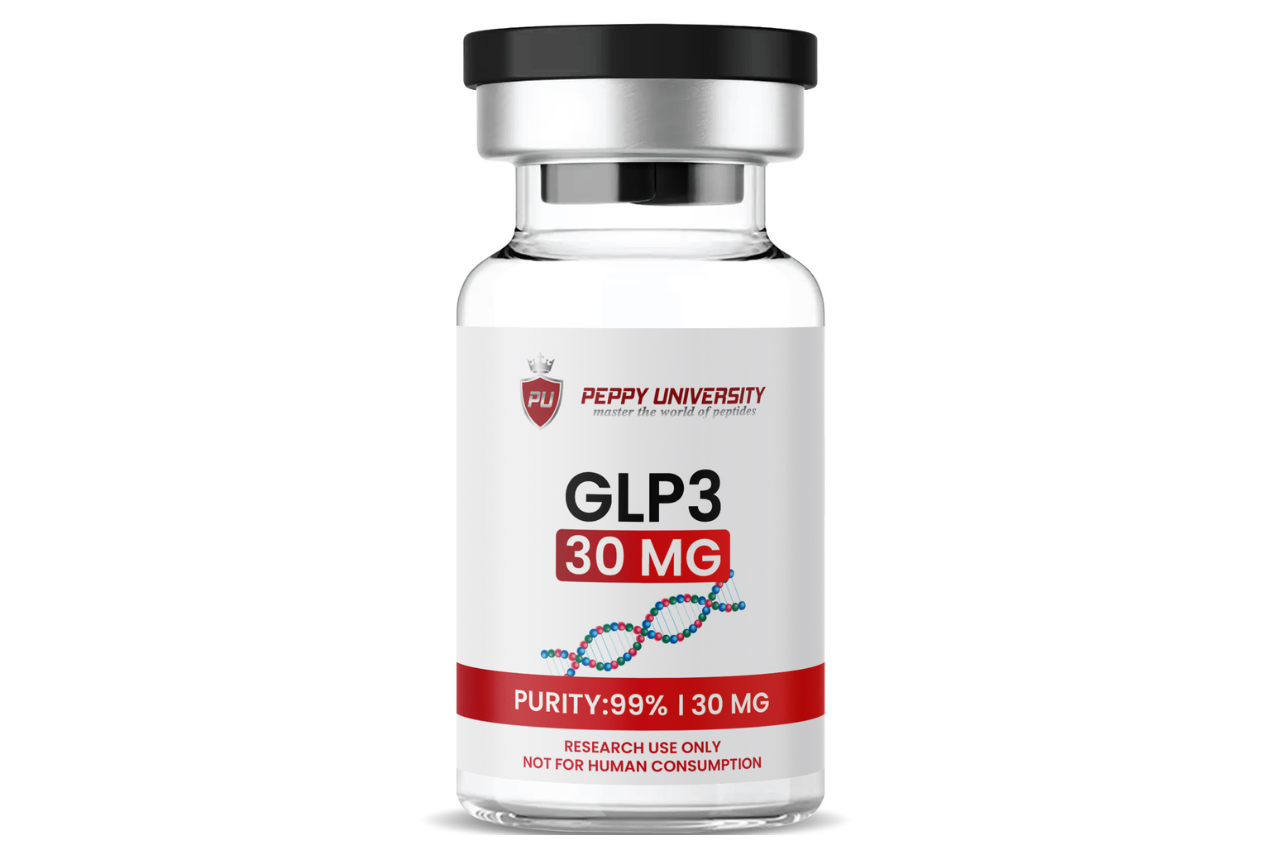
GLP R 30mg is a research-grade compound available at Peppy University for laboratory use.
GLP-3 (Retatrutide) 30mg – Research-Grade Triple Agonist Peptide for Metabolic & GLP Receptor Studies
Buy
GLP-3 (Retatrutide) 30mg at Peppy University, a premium research-grade triple agonist peptide used for
laboratory studies on GLP-1 receptor activity, GIP receptor signaling, glucagon receptor pathways, and advanced metabolic regulation. GLP-3 is the research name for
Retatrutide — the next-generation GLP peptide studied beyond semaglutide and tirzepatide, targeting three metabolic receptors simultaneously.
Where semaglutide targets GLP-1 only and tirzepatide targets GLP-1 + GIP,
Retatrutide (GLP-3) adds the glucagon receptor — the third target — which increases energy expenditure and drives hepatic fat oxidation in preclinical models. This triple-receptor mechanism is the focus of ongoing Phase 2 and Phase 3 metabolic research, published in peer-reviewed journals including JAMA.
What is Retatrutide (GLP-3)?
Retatrutide is a synthetic triple agonist peptide developed by Eli Lilly, currently in Phase 3 TRIUMPH trials as of 2026. In preclinical and Phase 2 research, it has been studied for its effects on:
- GLP-1 receptor activation — insulin secretion and gastric motility pathways
- GIP receptor activation — enhanced insulin response and adipose tissue signaling
- Glucagon receptor activation — increased energy expenditure and hepatic fat oxidation
GLP-3 in Preclinical Research
- Triple receptor agonism — Retatrutide simultaneously activates GLP-1, GIP, and glucagon receptors, offering a broader metabolic research profile than dual or single agonists.
- Body composition studies — Research has examined body composition changes over extended study periods, making it a compelling subject for metabolic research models.
- Glucose metabolism — Research has examined Retatrutide’s effects on fasting glucose, postprandial glucose, and HbA1c in metabolic dysfunction models.
- Hepatic fat reduction — The glucagon component drives hepatic fat oxidation pathways not activated by GLP-1 alone, relevant to NAFLD research models.
- Cardiovascular research — Studies are exploring GLP-1/GIP/glucagon receptor signaling in cardiac tissue and cardioprotective mechanisms.
GLP-3 vs Semaglutide vs Tirzepatide — Receptor Targets
- Semaglutide — GLP-1 agonist only
- Tirzepatide — GLP-1 + GIP dual agonist
- GLP-3 (Retatrutide) — GLP-1 + GIP + Glucagon triple agonist
Molecular Profile
- Form: Lyophilized powder
- Purity: 99% (HPLC verified)
- Storage: -20°C, protected from light and moisture
- Reconstitution: Bacteriostatic water or sterile saline
Key Benefits for Research
- Supports triple receptor metabolic research — GLP-1, GIP, and glucagon pathways in one compound
- Enables next-generation GLP studies beyond semaglutide and tirzepatide protocols
- Lab-tested, high-purity peptide for consistent and reproducible results
- Comes with scientific documentation for research compliance
Ideal for
scientific research, laboratory experiments, and advanced metabolism-focused peptide studies, GLP-3 (Retatrutide) ensures
reliable outcomes for researchers requiring
high-quality, reproducible results.
Order now from Peppy University for secure delivery and fast shipping.
Research Use Only: This product is intended for laboratory research and development purposes only. It is not a drug, food, dietary supplement, or cosmetic, and is not intended to diagnose, treat, cure, or prevent any disease. Not for human or veterinary use.
Why Researchers Choose GLP R 30mg
Peppy University lab-tests every batch before it ships and provides documentation for research compliance. This approach gives laboratories consistent, reproducible material without the guesswork of unverified sourcing.
Frequently Asked Questions
Is it third-party tested?
Yes, every batch is independently lab tested for identity and purity, with documentation available for research compliance.
How is it shipped?
Orders ship in discreet, plain packaging per our
Shipping Policy.
Where can I find related compounds?
Browse our full
GLP-1 / Weight category or view
all products at Peppy University.
Do you offer bulk pricing?
Check our
FAQ page for details on bulk and bundle research pricing.
Laboratory Handling & Compliance
Handle only with trained laboratory personnel using standard research protocols, appropriate personal protective equipment, and controlled storage conditions, in line with institutional and applicable local, state, and federal regulations.
Researchers exploring published literature can review indexed studies via
PubMed. This reference link is provided for research context only and is not a claim made by Peppy University about this specific product.
GLP R 30mg is sold strictly for laboratory research purposes and is not a drug, food, dietary supplement, or cosmetic.
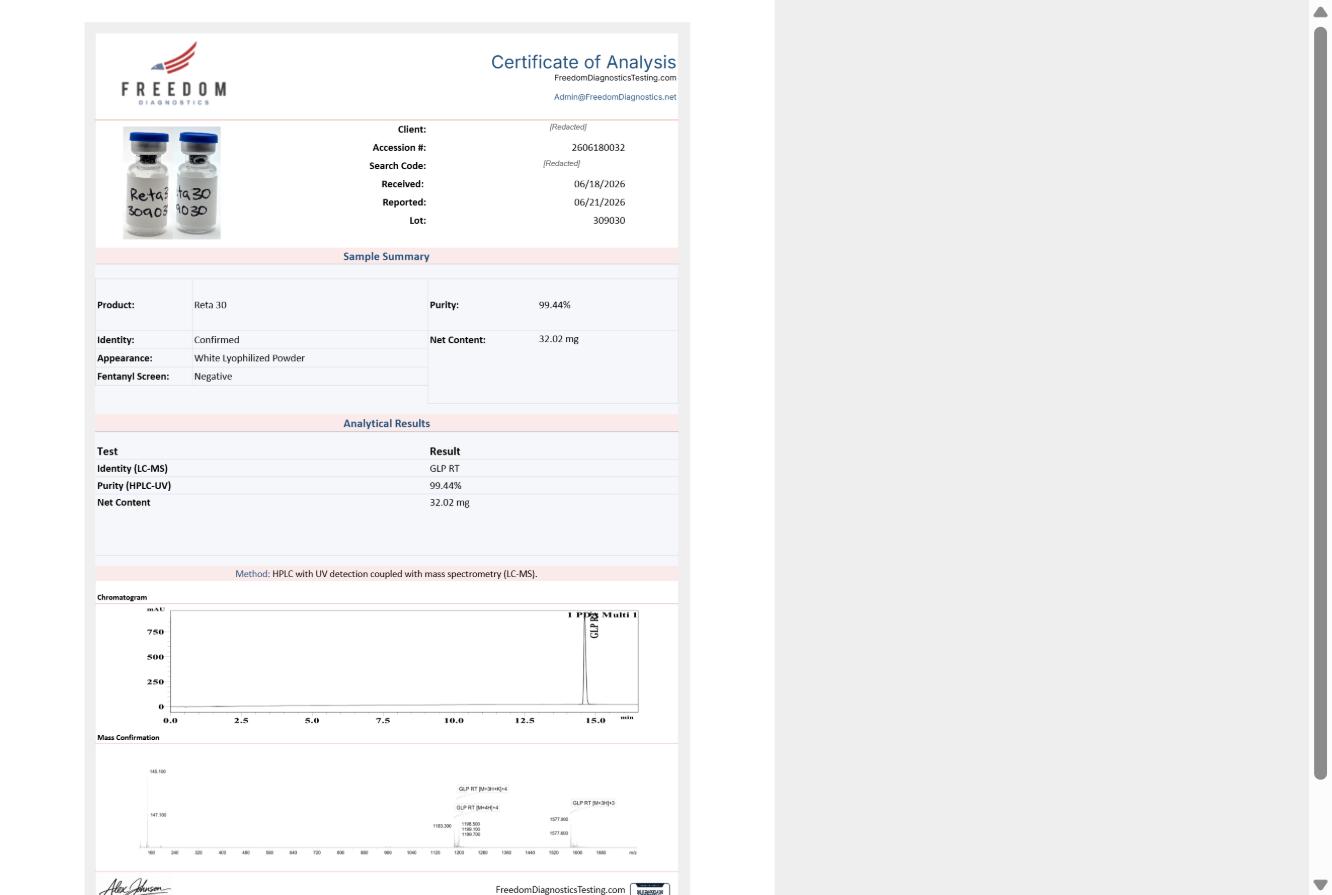
Certificate of Analysis — Sample Batch Results
- Batch / Lot: #309030
- Test Date: 06/21/2026
- Independent Lab: Freedom Diagnostics
- Expected Mass: 30 mg
- Actual Mass: 32.02 mg
- Purity: 99.44%
Storage, Documentation & Ordering Notes
Proper cold-chain handling and documented storage conditions help preserve the integrity of any research compound from the moment it leaves our facility. Peppy University packages every order to minimize temperature exposure in transit, and each shipment is accompanied by batch-level paperwork so a laboratory can maintain an accurate chain of custody for its internal records.
Every listing on this site is written and maintained by our internal team, not copied from a manufacturer catalog. That means the description in front of you reflects current sourcing, current testing practices, and current availability rather than outdated or generic marketing copy.
Before placing an order, researchers are encouraged to review our
Research Use Disclaimer and
Terms of Service, both of which outline the qualifications required to purchase and the limitations that apply to any compound sold on this site.
Institutions that require a formal quote, purchase order workflow, or recurring shipment schedule can reach our support team directly. We regularly work with university labs, contract research organizations, and independent research groups to set up accounts that fit their procurement process.
Many of the researchers who order from Peppy University are comparing sourcing options, checking documentation standards, or setting up a first-time account for their lab or department. We aim to make that process straightforward: transparent product information, consistent packaging, and a support team that can answer sourcing or compliance questions before an order is placed. If a research group needs additional certificates, updated documentation, or a custom quote for a larger project, that information can be requested directly from our team.
Peptide research continues to evolve quickly, and staying current with proper sourcing, handling, and documentation practices is part of running a credible laboratory program. Peppy University was built around that need, giving researchers a single, consistent place to source materials, review policies, and ask questions without navigating a maze of unclear listings or inconsistent customer support.
Our team periodically reviews product listings to keep information current, correct outdated claims, and ensure every page reflects our research-use-only policy. If a researcher notices anything unclear or has a question that is not covered in the FAQ section above, they are welcome to reach out before placing an order so we can help confirm the compound and quantity fit their project.
Every GLP R 30mg order from Peppy University includes third-party purity testing documentation. Researchers who request GLP R 30mg for peer-reviewed studies can review the certificate of analysis for that specific GLP R 30mg batch upon request.